
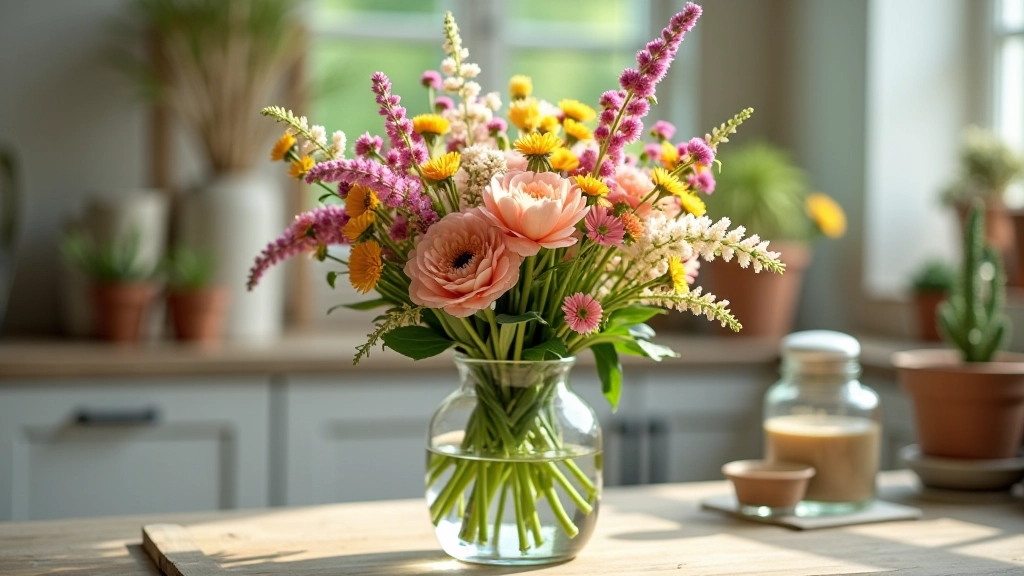
Wildflower Care: Keeping Your Bouquet Fresh Longer
Simple techniques for extending the life of your meadow flowers. We cover water changes, stem cuts, and temperature tips.
Read GuideDiscover the wildflowers we're harvesting this season. Learn what makes each species special, how they pair together, and why timing matters for the perfect bouquet.

Editorial Team
Written by the skanbell Wildflower editorial team, focused on honest information about wildflower bouquets and seasonal floral arrangements.
Summer's the peak season for wildflower picking. We're out in the skanbell meadows early most mornings, and the variety right now is honestly incredible. The fields are full of color — blues, yellows, pinks, purples — and each flower brings something different to a bouquet.
What we harvest changes week to week. A bloom that's perfect today might fade in a few days, so we focus on what's actually ready. That's why our summer selections are always different. We don't force anything to fit. We work with what nature's giving us.
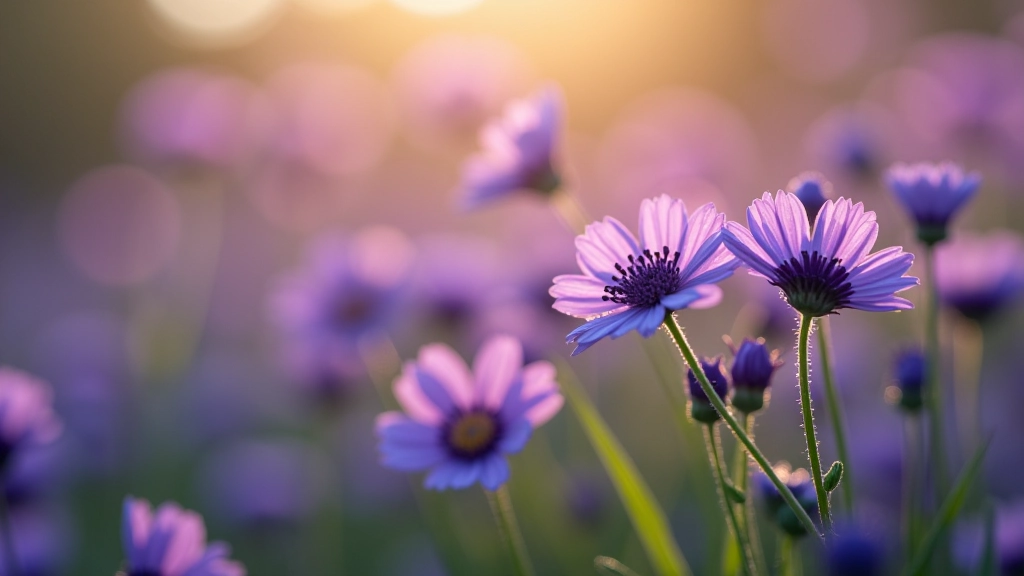
Bright, almost electric blue with a slightly fuzzy center. They're sturdy and last well in water — we usually get 8-10 days from these. The stems are thin but strong, so they work well in tight arrangements or as fillers.
Peak bloom: mid-June through August. Height: 24-36 inches.
These flat flower clusters in bright yellow are great for adding texture and movement. They're dried naturally in some arrangements and still look good weeks later. The stems are strong and don't bruise easily.
Peak bloom: July through September. Height: 18-28 inches.
Soft pink-purple clusters with a subtle herbal scent. These add an airy, delicate quality to any arrangement. They're lightweight, so they won't weigh down a bouquet, and they transition beautifully as they age.
Peak bloom: late July through September. Height: 12-24 inches.
Golden yellow with deep brown centers — they're impossible to miss. Very long vase life, sometimes lasting 2 weeks. The petals are thick and waxy, so they don't bruise, and they're great for bold, sunny arrangements.
Peak bloom: mid-July through October. Height: 24-36 inches.
Putting a bouquet together isn't just about throwing flowers in a vase. It's about balance — colors that work together, heights that create flow, and textures that keep your eye moving.
We usually start with a dominant color — say, the blue cornflowers — then add a secondary color that complements it. Yellow Achillea and cornflowers are a classic combo. Add Wild Marjoram for softness, and suddenly you've got depth.
Tall flowers at the back, shorter ones at the front. It's not a hard rule, but it gives the arrangement shape and makes it easier to display. Rudbeckia provides height. Marjoram fills gaps. Everything has a role.
Achillea's flat clusters contrast with cornflowers' round centers. Marjoram is airy. This mix keeps the arrangement from looking flat or heavy. Each flower type does something different visually.
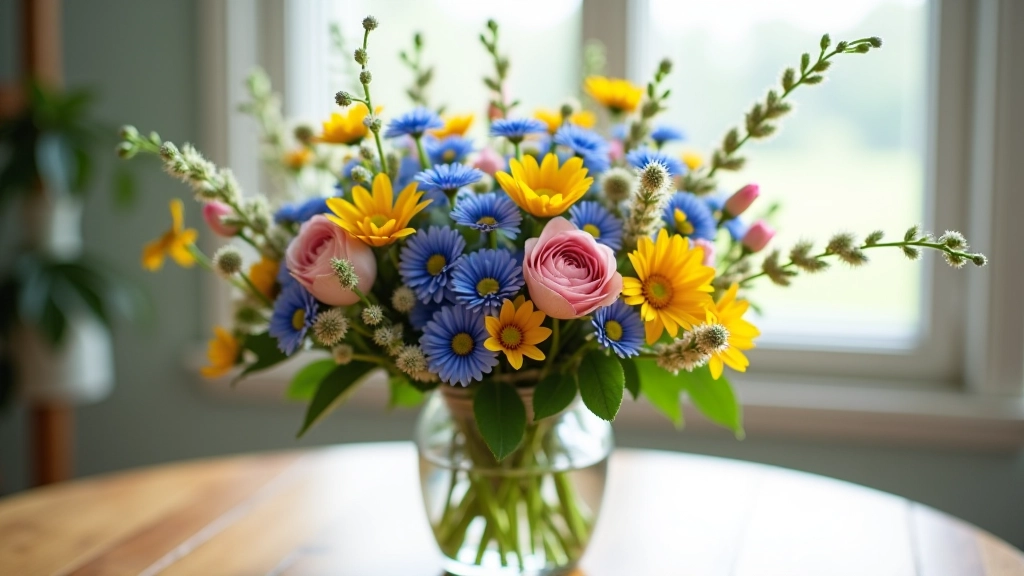
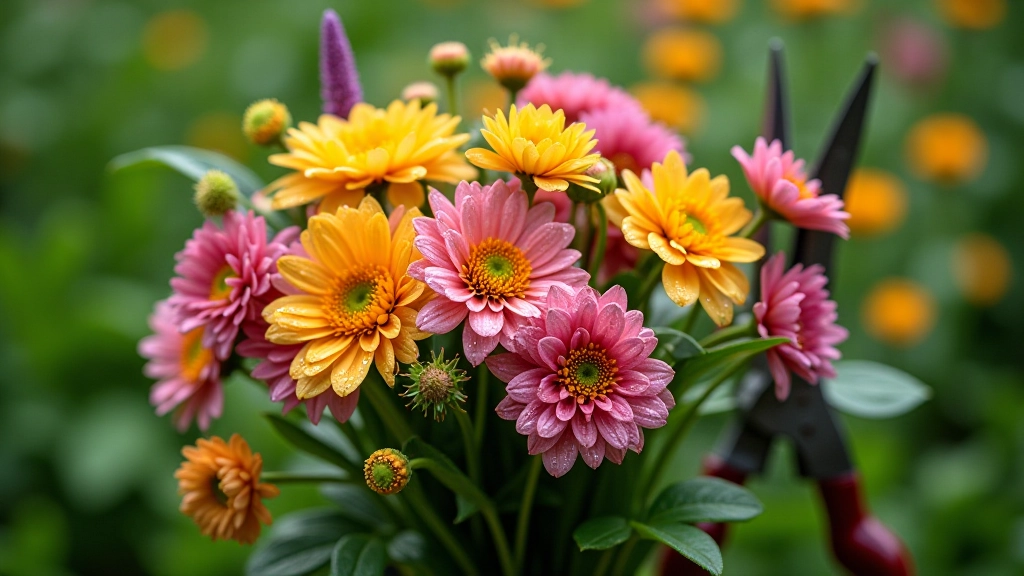
We pick our flowers early in the morning when stems are fully hydrated. If you cut a flower at 3pm on a hot day, it's already stressed. That one difference can cost you 2-3 days of vase life.
We also cut below the lowest leaf node and strip any foliage that'd sit in water. Submerged leaves rot and block water uptake. So does bacteria. We're not using any special tricks — just respecting what the flowers need.
The moment a flower's picked, it's starting to age. That's why we don't harvest everything we could. We pick what'll be sold within hours. That's the only way we can guarantee you're getting truly fresh flowers.
Summer's abundance is both a gift and a challenge. The long days and warm temperatures push flowers to bloom faster, which means we get more variety at once. But it also means blooms fade quicker in heat.
Summer bouquets won't last quite as long as spring or fall selections. You're probably looking at 7-10 days instead of 10-14. That's not a failure — that's summer. The flowers are working harder to bloom, and they fade faster. It's natural.
But the colors are brighter, the variety is bigger, and there's an energy to summer wildflowers you don't get other seasons. We think it's worth it.
Summer wildflowers are honest. They're not bred to be perfect. They're colors and shapes and textures that grew up in a meadow, and they bring that realness into your space. You're not getting a trophy arrangement — you're getting a piece of summer that'll sit on your table and remind you why wildflowers matter.
If you're looking for something specific right now, reach out. We can tell you exactly what's blooming this week and build something around what we've actually got. No promises, no guessing. Just real flowers, picked this morning.
This guide is informational and based on our experience harvesting and arranging wildflowers in the skanbell region. Vase life, bloom times, and flower behavior can vary depending on local climate conditions, water quality, temperature, and individual care practices. We recommend experimenting with these suggestions in your own space to see what works best for your environment. For specific questions about wildflower arrangements, feel free to reach out to our team.
Simple techniques for extending the life of your meadow flowers. We cover water changes, stem cuts, and temperature tips.
Read Guide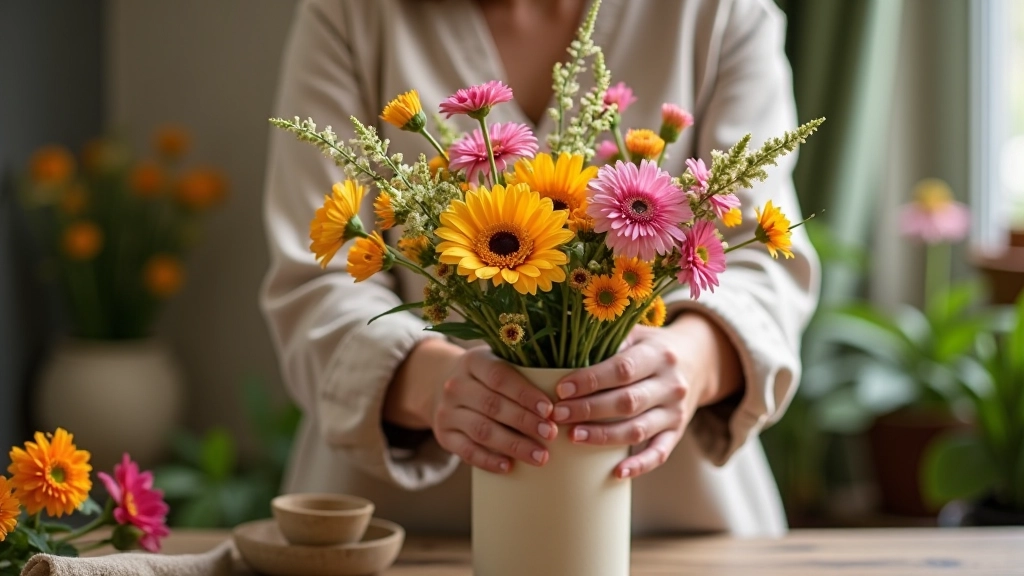
Step-by-step instructions for creating balanced wildflower arrangements at home. Learn color theory, height balance, and texture mixing.
Read Guide
What blooms when in our skanbell meadows throughout the year. We've mapped out the peak seasons for each major species.
Read Guide